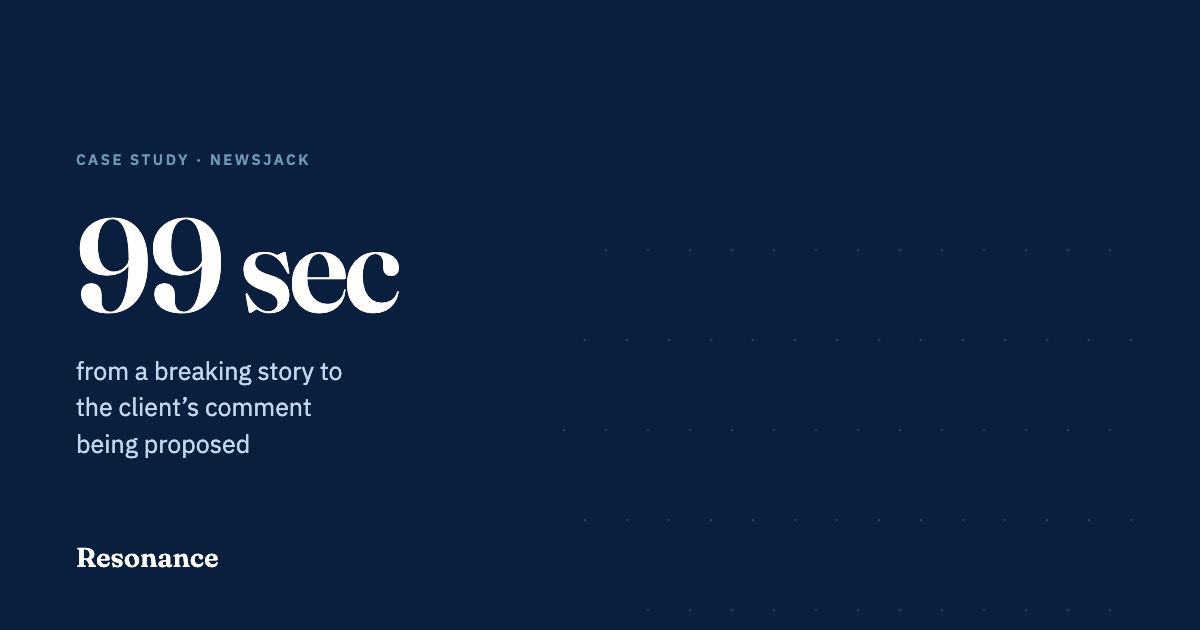
- 99 sec
- from the story landing to it being flagged as relevant to the client
- 3h 19m
- from the story landing to the comment reaching journalists
- 71%
- of the journalists pitched opened it, 10 of 14
The brief
The client is a software supply chain security vendor in a market that moves on incidents. When a widely used package is compromised, security journalists write the story within hours and look for someone credible to explain what it means. A useful comment on the day counts for far more than a planned campaign, while one that arrives a day late is rarely used.
Speed is the hard part, because spotting the story, judging its relevance, drafting something the spokesperson will actually say, getting sign-off and reaching the right journalists usually takes longer than the news cycle allows.
What we did
When attackers hijacked Axios, a JavaScript library downloaded around 100 million times a week, Agentcy flagged the story within seconds. We drafted the comment around the spokesperson's established view and sent the approved pitch to 14 matched journalists at outlets including Dark Reading, The Register and Reuters.
How it ran, March 2026
- 31 Mar
07:03The Axios attack story lands in the news feed - 31 Mar
07:04Proposed as a newsjack, squarely in the client’s field - 31 Mar
09:35Comment drafted around the spokesperson’s view - 31 Mar
10:16Spokesperson, client and our team sign it off - 31 Mar
10:22Pitched to 14 matched journalists - 1 Apr
09:13DevOps.com runs the quote word for word

Then it happened twice more
Anthropic's Project Glasswing. The comment was pitched to 34 journalists, including the FT, WSJ, TechCrunch and Sky News, and 22 of them opened it before IT Brew quoted the spokesperson the next day.
G7 guidance on AI software bills of materials. The comment went out mid-morning, and SecurityWeek, which has 457,000 monthly readers, ran the quote word for word the same day.
Why it worked
None of this needed a bigger budget. It depended on knowing within seconds that a story was relevant, on a spokesperson position agreed in advance so that drafting meant editing an existing view, and on a pitch list built from the journalists who actually cover the beat. The same discipline made it possible to repeat the result on two more stories.